

The precautions for debugging the parking self-service payment machine are as follows:
I. Hardware inspection and configuration
1. Appearance and structure inspection
- Check whether the shell is damaged or deformed to ensure that it meets the design requirements and has waterproof, dustproof, explosion-proof and other characteristics.
- Confirm that each module (such as touch screen, currency receiving component, code scanning component, etc.) is firmly installed, reasonably laid out, and ergonomically designed.
2. Power supply and grounding
- Confirm that the power supply voltage meets local standards (such as 110V/220V) and the grounding resistance is less than 4Ω to ensure safe operation of the equipment.
3. Module function test
- Touch screen: Check whether the display is clear, whether the touch is sensitive, and whether the operation interface is friendly.
- Currency reception and change: Test the banknote and coin reception function to ensure that it can recognize multiple denominations and accurately change.
- Code scanning component: Verify whether the code scanning function is normal and support multiple payment methods (such as QR code payment).
- Receipt printing: Check whether the printing function is normal and ensure that the printed content is clear and accurate.
- IP network intercom component: Test the remote intercom function and ensure that the audio input and output are normal.
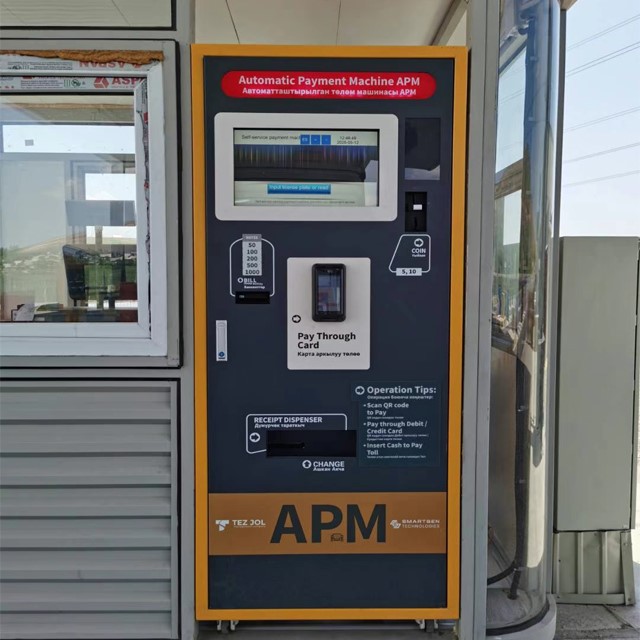
II. Software and network configuration
1. Network connection
- Ensure that the device is connected to a stable network, supports wired and wireless connections (such as Wi-Fi or 4G-LTE), and is configured with the correct IP address.
- Test network latency to ensure fast and stable data transmission.
2. Software function test
- License plate recognition: Enter the license plate number and confirm that the parking information is accurate.
- Payment method: Test multiple payment methods such as banknotes, coins, bank cards, and scan code payment to ensure that the transaction is safe and reliable.
- Voice prompt: Check whether the voice broadcast function is normal and ensure that the user operation instructions are clear.
3. Data security and privacy
- Ensure that the device complies with local privacy regulations (such as GDPR) and encrypts user data.
- Set the data retention period to avoid data leakage risks.
III. User interaction and operation
1. Operation interface
- Confirm that the operation interface language supports the local language and the operation process is simple and intuitive.
- Test the operation process to ensure that users can easily complete the payment operation.
2. Exception handling
- Test the device's handling capabilities when encountering a fault, such as whether the remote intercom function is normal.
- Confirm that the device can provide alternative payment methods or prompt users to contact customer service when there is no network or system failure.
IV. Environmental adaptability
1. Climate adaptation
- Ensure that the device can operate normally under local climate conditions, such as high temperature, low temperature, high humidity, etc.
- For extreme climate areas, add auxiliary equipment such as sunshades and heating sheets.
2. Installation location
- Choose a suitable installation location to avoid direct sunlight, rain erosion and vehicle collision.
- Ensure that the device is installed firmly to avoid damage to the device due to uneven ground or vibration.
V. Maintenance and support
1. Maintenance convenience
- Confirm that the device adopts a modular design to facilitate maintenance and replacement of parts.
- Check whether the device supports remote maintenance and upgrades.
2. Technical support
- Ensure that the device manufacturer provides comprehensive technical support, including remote assistance and on-site services.
- Provide detailed user manuals and operation guides for the convenience of users and maintenance personnel.
Through the above steps, it can be ensured that the parking self-service payment machine achieves optimal performance during the debugging process, meets user needs and complies with local regulations.